

The rapid evolution of the digital landscape necessitates a deep understanding of effective e-commerce business model crafting. With e-commerce sales projected to soar to $6.3 trillion by 2024, the online retail sector offers vast potential. This guide is meticulously designed for budding entrepreneurs eager to devise a web-based business strategy that addresses the multifaceted consumer needs in Australia. It elaborates on critical components and tactics essential for forging a strong digital business presence that not only distinguishes itself in the marketplace but also enriches customers’ experience.
Key Takeaways
- Understanding the importance of a strong E-Commerce Business Model.
- Insights into the online retail framework essential for success.
- Learning about the projected growth of e-commerce sales.
- Strategies for launching a sustainable web-based business plan.
- How to cater to diverse consumer needs across Australia.
- Recognising the skills required for building a successful e-commerce venture.
Understanding E-Commerce Business Models
An effective e-commerce business model is crucial for navigating the digital marketplace’s complexities. It outlines our operation online, incorporating various approaches specific to our offerings. Understanding these models enables us to improve our online sales approach. This alignment enhances our ability to meet customer needs effectively.
What is an E-Commerce Business Model?
A digital business model acts as our online navigation system. It details our interaction methodologies with customers, spanning from Business-to-Consumer (B2C) to Business-to-Business (B2B). Each method offers unique opportunities and poses specific challenges. Grasping this concept is vital for businesses aiming to excel in the e-commerce domain.
Types of E-Commerce Business Models
- Business-to-Consumer (B2C): Direct sales to end users.
- Business-to-Business (B2B): Transactions between businesses.
- Consumer-to-Consumer (C2C): Individuals selling to other individuals through platforms like eBay.
- Consumer-to-Business (C2B): Individuals offering products or services to businesses.
Benefits of Having a Strong Business Model
A solid e-commerce business model yields significant benefits. It clarifies our operational direction, ensuring our actions are consistent with our strategic vision. A well-defined online commerce framework improves our response to consumer demands. It simplifies our journey toward profitability, equipping us for the online market’s competitiveness.

Key Components of an E-Commerce Business Model
A successful e-commerce business model relies on several crucial elements that guide our value delivery and operational effectiveness. By grasping these core components, we’re able to develop an all-encompassing strategy for our online store. This strategy resonates deeply with our target audience and upgrades our virtual presence significantly.
Value Proposition
The value proposition is our declaration of what makes us standout in the bustling e-commerce arena. It addresses why consumers should favor our offerings above the competition. This proposition, by underscoring unique attributes while simultaneously solving consumer dilemmas, makes our products or services highly sought after.
Revenue Streams
For financial resilience, diversifying revenue streams is indispensable. Our e-commerce business taps into various channels like direct sales, subscriptions, and affiliate marketing. An effective online store strategy is pivotal. It ensures we capitalise on every revenue-generating opportunity, thus bolstering our financial position.
Customer Segmentation
Customer segmentation is crucial for precisely targeting our marketing initiatives. We segment our clientele by demographics, behaviors, and preferences. This allows us to customize our communication and promotions. Consequently, this strategy boosts engagement and increases conversion rates.
Key Partners and Resources
Forging robust partnerships and securing vital resources is essential for achieving our business goals. By collaborating with suppliers, technology providers, and marketing agencies, we enhance our operational capabilities. Such partnerships are indispensable. They grant us the flexibility and robustness needed to thrive in the ever-changing e-commerce sector.
Creating Your E-Commerce Business Model Canvas
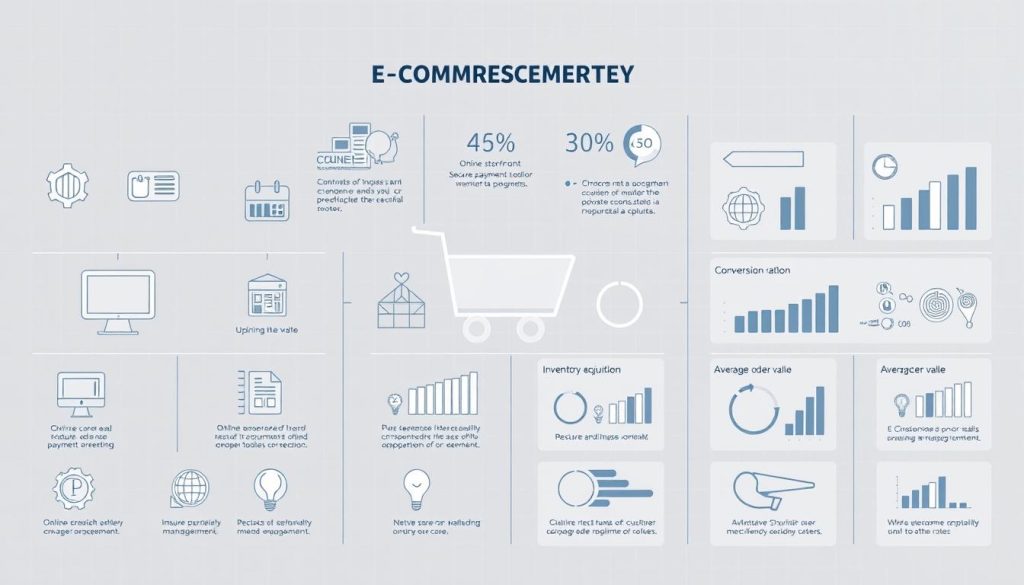
The Business Model Canvas acts as a crucial instrument for formulating our e-commerce strategy. This framework facilitates a visual presentation of our business’s fundamental aspects. It segments crucial areas such as customer demographics, unique selling propositions, and modes of delivery, offering deeper insights into our strategic orientation. Through this breakdown, we can comprehend our business dynamics and guide decision-making processes more effectively.
Introducing the Business Model Canvas
Devised to enhance comprehension of our online retail structure, the Business Model Canvas encapsulates vital operational elements. This visualization tool is instrumental in synchronizing various business components while providing a distinct roadmap for stakeholder engagement. It serves to crystallize our business methodology, ensuring alignment across different domains.
Steps to Fill Out Your Canvas
By adhering to a series of systematic steps, we can proficiently complete our canvas:
- Pinpoint our target customer sectors and ascertain our primary audience.
- Articulate our value propositions – highlighting the uniqueness and allure of our offerings.
- Specify the channels for delivering our products or services to the clientele.
- Identify indispensable partners and resources essential for our operational framework.
- Formulate revenue streams to comprehend the financial viability of our venture.
Examples of E-Commerce Business Model Canvases
For inspiration, examining a variety of successful e-commerce Business Model Canvases can be very enlightening. These examples, derived from thriving online businesses, demonstrate how the canvas is applied in real-world scenarios. They afford us a glimpse into the varied methodologies and strategies embraced by different entities in the e-commerce domain. Such exemplars foster our creativity and provide a benchmark for crafting our unique model.
Choosing the Right E-Commerce Platform
Selecting an appropriate e-commerce platform is crucial in the digital marketplace landscape. Numerous options necessitate a thorough comparison to match our business requisites. Assessing features, scalability, and ease of use, assists in pinpointing an ideal choice.
Comparing Top E-Commerce Platforms
We evaluate leading platforms, including Shopify, WooCommerce, and Magento. Each platform serves distinct business needs. Shopify excels in simplicity and ease, making it ideal for novices. WooCommerce offers adaptability for WordPress aficionados. For larger enterprises seeking comprehensive customization, Magento is the go-to solution. Grasping the nuances between them aids in choosing a platform that aligns with our operational goals.
Factors to Consider When Choosing
- Ease of Use: The platform should boast an intuitive interface, permitting effortless store management sans comprehensive technical insight.
- Scalability: Accommodating business expansion, the platform must adjust to augmented demands and enhanced traffic.
- Support and Community: Opting for a platform with ample support and a vibrant community is advantageous for troubleshooting and guidance.
Integration with Payment Gateways
For our digital marketplace model, crucial is the effortless amalgamation with payment gateways. A superior platform endorses diverse payment methods, catering to variegated customer preferences. This compatibility bolsters customer contentment and smoothens the transaction process.
Building and Developing Your Online Store
Creating an engaging online store necessitates a blend of elements that foster an uninterrupted shopping journey for customers. We need to meticulously orchestrate design elements, enhance mobile responsiveness, and refine product descriptions. This coordination is fundamental to our online strategy’s effectiveness. It attracts and keeps buyers, thereby boosting our internet commerce.
Design and User Experience
The initial impression of our online store is pivotal, reliant on its design. A clean, user-friendly layout ensures customers can browse with ease. Considerations critical to this include:
- Consistent branding that reflects our identity
- A responsive design that adapts to various devices
- Easy-to-find navigation menus and search functions
Mobile Optimisation
In an era where mobile shopping prevails, ensuring our store’s mobile adaptability is imperative. To make our store mobile-friendly, we must:
- Optimise page load times for quicker access
- Use larger buttons for easy tapping
- Ensure text is readable without excessive zooming
High-Quality Product Descriptions
Enticing customers hinges on the art of crafting compelling product narratives. Impactful content is key to driving sales, thus we must:
- Provide comprehensive details on features and benefits
- Employ vibrant visuals to enhance the text
- Embed keywords optimally to boost SEO
Marketing Strategies for E-Commerce Success
Marketing strategies are essential for enhancing an e-commerce presence. An adaptable online retail framework enables customer engagement and visibility improvement. Herein, we discuss key techniques for elevating businesses in the digital marketplace.
SEO Strategies for E-Commerce
SEO is critical for online sales strategies. It involves optimising content, enhancing load times, and ensuring mobile compatibility to boost organic search rankings. Integrating keywords in product descriptions and blogs is crucial. Additionally, tactics like backlink building and structured data markup significantly improve search result rankings.
Paid Advertising Techniques
Effective paid advertising can significantly extend our reach. PPC campaigns, particularly through Google Ads, offer immediate customer visibility. Furthermore, social media advertisements on platforms like Facebook and Instagram enable precise market targeting. It’s imperative that ads reflect our marketing strategy, engaging our target audience and directing traffic to our website.
Building Brand Loyalty
Cultivating strong brand loyalty is crucial for e-commerce growth. Superior customer service promotes positive experiences, fostering customer retention. Interaction via social media and email newsletters keeps our brand prevalent in consumers’ minds. Loyalty programs and personalized communications solidify consumer relationships, underpinning our enduring success.
Measuring Success in Your E-Commerce Business
In the highly competitive e-commerce sector, evaluating our performance meticulously is crucial. Establishing measurable metrics is instrumental for gauging our digital business model’s efficacy. This systematic evaluation provides insights into areas needing enhancement while allowing us to acknowledge our triumphs.
Key Performance Indicators (KPIs) to Track
Employing Key Performance Indicators (KPIs) is vital for maintaining insight into our e-commerce venture’s health. Critical KPIs encompass:
- Conversion Rates: Assessing the portion of visitors who finalize purchases enlightens us on our sales methodologies.
- Average Order Value: Discerning the typical expenditure of customers aids in tailoring our marketing tactics and promotions.
- Customer Acquisition Cost: Gauging the expenditure for gaining new customers helps evaluate our marketing strategies’ effectiveness.
Customer Feedback and Reviews
Soliciting customer feedback cultivates a bond of trust with our clientele. Reviews do more than guide our product standards; they unlock avenues for refinement. By valuing their perspectives, we enhance our offerings and pave the way for a more prosperous digital enterprise. Interaction with feedback underscores our dedication to customer fulfillment.
Sales Analytics for E-Commerce
Analyzing sales data offers us insights into prevailing market trends. This analysis assists in aligning our strategies with consumer inclinations and market exigencies. Understanding sales patterns enables us to refine our operations and boost our digital model’s efficiency. These insights are paramount for making informed choices, fostering growth and adaptability in a fluctuating marketplace.
Future Trends in E-Commerce Business Models
In the forthcoming years, numerous factors will shape the evolution of E-Commerce. The digital marketplace is dynamic, constantly evolving to meet consumer desires and preferences. Recognising and adapting to these changes is crucial for refining our approaches and maximising the efficacy of our online platforms. By integrating new trends, we not only elevate our offerings but also solidify our place within the competitive market landscape.
The Rise of Subscription Services
Subscription models have witnessed a significant surge in popularity, delivering both convenience and exceptional value to consumers. This approach enables the cultivation of enduring customer relationships and the assurance of consistent revenue. Aligning with the digital commerce framework, it fosters a predictable pattern of sales and boosts customer loyalty.
Personalisation and AI in E-Commerce
Employing artificial intelligence enhances our capacity to provide customised shopping journeys. Personalisation cements a stronger bond with consumers, making them feel uniquely recognised and appreciated. Leveraging AI to dissect and interpret consumer data allows for the delivery of bespoke recommendations. This strategy not only escalates sales but also amplifies customer satisfaction levels.
Sustainability in E-Commerce Practices
The shifting consumer focus towards sustainability necessitates the integration of green practices within our operations. This movement aligns with the increasing demand for responsible business conduct. Implementing eco-friendly measures, from packaging choices to ethical sourcing, can significantly benefit our image. It appeals to environmentally conscious consumers, differentiating us within the market.
